
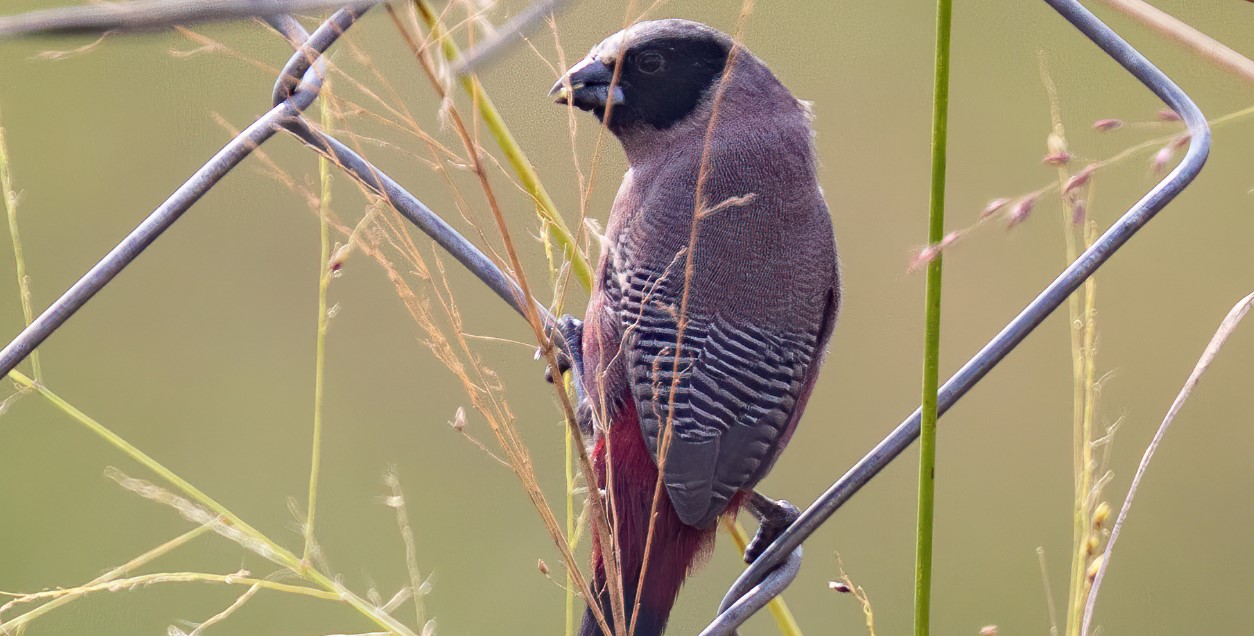
Exploring the Black-faced Waxbill in Uganda
Exploring the Black-faced Waxbill in Uganda: The “Pearl of Africa,” Uganda, is popular for its remarkable biodiversity, especially its rich and active bird population. Uganda is known for its diverse range of sunbirds and weavers, including the famous Shoebill, which draws birdwatchers from all over the world. Among many other attractive species, the Black-faced Waxbill (Estrilda erythronotos), a little, discreet, yet intriguing bird, is sometimes overlooked. Both experienced birdwatchers and those who are inexperienced with the wonders of Ugandan bird watching will find this article useful as it explores the distribution, habitat, behaviour, and conservation status of this often ignored bird in Uganda.
A Brief Introduction to the Black-faced Waxbill in Uganda
Small and social, the Black-faced Waxbill is a member of the Estrildidae family of finches. This bird is a beautiful sight to behold, distinguished by its vivid red rump, elegantly banded flanks, and striking black facial mask. Although the male’s black face mask is typically slightly more noticeable, both sexes have identical plumage. They usually weigh about 8 to 10 grammes and are about 11 to 12 cm long. Their attractiveness is increased by the fact that they are often difficult to identify due to their small size and desire for dense cover.
Distribution and Habitat when Exploring the Black-faced Waxbill in Uganda
Although it is not endemic to Uganda, the Black-faced Waxbill can be found there in a variety of locations, especially in the drier southwestern and northeastern areas. Its existence is strongly related to particular environmental factors. They prefer cultivated regions, savannahs, and open grasslands, frequently those that are close to water sources. They flourish in regions with scattered trees, thick grasses, and shrubs that offer plenty of cover, places to nest, and food sources. The following are the best locations in Uganda where the Black-faced Waxbill can be seen:
- Kidepo Valley National Park: Known for its varied birds and dry landscapes, this isolated park is located in northeastern Uganda. Here, the Black-faced Waxbill is comparatively common, frequently observed in watercourses and in savannah grasslands.
- Situated in southwest Uganda, Lake Mburo National Park features a variety of habitats, such as wetlands, savannahs, and acacia trees. The drier regions, especially those near the park’s edge, are home to the waxbill.
- Queen Elizabeth National Park: This park is home to a wide variety of birds, while being most recognised for its larger fauna. The expansive grasslands and shrublands that border the central areas of the park are home to Black-faced Waxbills.
- Private Land and Farmlands: Due to its versatility, the waxbill can flourish in agricultural environments, particularly in areas where conventional farming methods that preserve some natural flora are still widely used. They can be found close to homesteads, in hedgerows, and in fallow fields.
It is noteworthy that seasonal rainfall patterns, as well as the availability of food and water supplies, can cause fluctuations in the Black-faced Waxbill’s distribution. They might congregate close to fixed water sources during dry spells, but they might spread out more widely throughout the terrain during the rainy season.
Behavior and Ecology/Exploring the Black-faced Waxbill in Uganda
The social behaviour of the Black-faced Waxbill is remarkable. Usually, they are found in tiny flocks of five to twenty individuals. As they roam through the grasslands in pursuit of seeds, which are their main food source, these flocks forage together. Small grass seeds are especially appealing to them, and they expertly extract them with their pointed bills.
They have similarly fascinating vocalisations. Their gentle, high-pitched chirps and trills are their primary means of communication, and they are frequently employed to keep in touch within the flock. Identification requires close observation because these sounds might be hard to detect in noisy settings.
The Black-faced Waxbill practices unique courtship rituals as part of its breeding behaviour. The male shows off to the female by singing gently, fluffing his feathers, and jumping about her. Usually built in thick bushes or shrubs, nests are hidden close to the ground. They are composed of dried grasses, leaves, and feathers and have a spherical appearance. Both parents incubate the clutch of four to six white eggs laid by the female for about 12 to 14 days. Following hatching, the chicks are fed insects and seeds that have been regurgitated.
Challenges and Conservation Status: Exploring the Black-faced Waxbill in Uganda
Despite its relatively wide distribution, the Black-faced Waxbill faces several challenges that could potentially impact its long-term survival. These include:
- Degradation and loss of habitat: One of the biggest threats is the transformation of savannahs and grasslands into farms and communities. The Waxbill is forced to look for alternate habitats when vegetation is cleared since there are fewer foraging and breeding locations available.
- Overgrazing: Unchecked livestock grazing can destroy grasslands, which lowers the quantity of grass seeds, which is a vital Waxbill food supply.
- Pesticide Use: The Waxbills may be directly harmed by poisoning due to the extensive use of pesticides in agriculture, which can contaminate their food source.
- Climate Change: Waxbill populations may drop as a result of altered rainfall patterns and more frequent droughts, which can have a detrimental effect on grassland ecosystems.
Currently, the International Union for Conservation of Nature (IUCN) has designated the Black-faced Waxbill as a “Least Concern” species. It is important to remember that this classification does not imply complacency. The long-term survival of this species depends on ongoing observation of habitat conditions and population changes.
Birding Tips when Exploring the Black-faced Waxbill in Uganda
Here are a few practical tips for birders hoping to observe the Black-faced Waxbill in its natural habitat:
- Visit during the Dry Season: Although waxbills can be seen all year round, it is usually easier to spot them during the dry season when there is less foliage.
- Pay Attention to Grasslands and Savannahs: Focus your search on regions that have farmed areas close to water sources, savannahs, and open grasslands.
- Look for Flocks: Keep in mind that waxbills usually inhabit tiny flocks, so exercise patience and pay close attention to the surroundings.
- Pay attention to their calls. Even when they are concealed in thick vegetation, you can still find them by learning to identify their high-pitched, gentle chirps and trills.
- Use Binoculars: To see these tiny birds, you’ll need a decent set of binoculars.
Despite not being the most noticeable bird in Uganda, the Black-faced Waxbill contributes to the rich biodiversity of the nation. We can aid in its conservation and guarantee that future generations will be able to enjoy this charming tiny finch by learning about its range, preferred habitat, and difficulties. Therefore, do not forget to look for the Black-faced Waxbill the next time you are seeing Uganda’s avian treasures. The beauty and charm of this frequently disregarded gem may simply astound you. Keep in mind that every bird, no matter of size, is essential to preserving the ecosystem’s delicate balance. It is our joint duty to conserve them.We can contribute to the long-term preservation of the Black-faced Waxbill and all of Uganda’s spectacular birds by encouraging sustainable tourism, encouraging ethical land management techniques, and increasing public knowledge of the value of the preservation of biodiversity. For rewarding birding tours in East Africa, contact Journeys Uganda.