

Exploring the Primates of Uganda
Exploring the Primates of Uganda: Uganda feels like stepping into a living postcard. The air is green and humid, the trees whisper with the wind, and somewhere in the forest, a group of primates goes about its day as if you’re not even there. Yet you’re there—with a notebook in your pocket, a camera slung over your shoulder, and a heart a little wider than before. This guide is for the moments that linger: the first glimpse through a moving curtain of leaves, the shy glance that says hello, the crack of a branch that signals a new chapter in your day.
Why Exploring the Primates of Uganda? A primer on primate diversity
- Imagine a country where gorillas, mangabeys, golden monkeys, vervet monkeys, and chimpanzees all share the same map of forests, rivers, and hills. That’s Uganda.
- Trekking and viewing feel intimate here because parks manage numbers and paths with care—so your presence supports conservation as you soak in the experience.
- It’s not just a checklist of species; it’s a story of communities, rangers, and scientists working together to protect a legacy that visitors help sustain.
Species to observe when exploring the Primates of Uganda
1) Mountain Gorillas (Gorilla beringei beringei)
Where to see them
- Bwindi Impenetrable National Park in the southwest and Mgahinga Gorilla National Park at the mountains’ edge. Some days feel like a soft, green labyrinth; other days open into clear blue skies above the canopy.
What to expect on a trek
- Treks can be 2 to 8 hours round-trip, depending on where the family is today. Most groups spend 1–2 hours with the gorillas once they’re found.
- The trail can be steep, muddy, and rooty. You’ll meet porters who carry packs, offer guiding hands, and cheer you on when you find your rhythm again.
- Humidity, forest scent, and a quiet awe come together. The silverback makes a rare eye contact; your breath catches in a shared moment of stillness.
- Photography? Natural light only—no flash. You’ll want a steady hand and a wide lens to capture the moment without intruding.
A quick portrait of gorillas when exploring the Primates of Uganda
- Family life: A silverback leads, females nurture, juveniles tumble and practice little stumbles that look almost choreographed in their own way.
- What they eat: Leaves, shoots, and the occasional fruit—the forest is a pantry with seasonal specials.
- Vibe: Usually calm, often curious, never rushed. They move because the forest moves around them.
Viewing tips for gorillas when exploring the Primates of Uganda
– Quiet is your friend here. The forest amplifies every sound.
– Time with the group is precious—respect the limit and let the moment breathe.
– Dress earthy, stay warm, and bring a light rain layer; you might start in the sun and end in drizzle.
– If you feel unwell, skip the trek. Your health keeps the gorillas safe and the day enjoyable for everyone.
2) Chimpanzees (Pan troglodytes)
Where to see them
- Kibale National Park is a favourite for a reason—dense forests, high encounter rates, and the kind of mornings that start with birdsong and a chorus of chimp calls.
- Queen Elizabeth National Park and Toro-Semliki Wildlife Reserve offer more chances to watch their social theatre unfold.
What to expect on a chimpanzee trek when exploring the Primates of Uganda
- Most chimp treks run 2–4 hours. You’ll track a troop as they move, forage, and share tools in a way that feels almost improvisational.
- Expect vocalisations: pant-hoots, chattering, and the rhythmic “drumming” on trees that signals a gathering of elders and youngsters.
- Close-ups happen naturally as they move through the canopy—your patience and a respectful distance pay off in intimate moments.
A quick portrait of chimpanzees when exploring the Primates of Uganda
- Social life: Chimp groups split and reform over the day. Some subgroups are musical; others are serious strategists planning for fruit or insects.
- Tool use: They’re crafty—sticks for foraging, leaves for drinking or cleaning.
- Diet: Fruit is king, with insects and leaves playing supporting roles.
Viewing tips of chimpanzees when exploring the Primates of Uganda
– Stay with your guide and your group. Chimps can surprise you with a gentle approach, but they deserve a boundary.
– Don’t wear strong scents; their senses are sharp.
– Let the moment unfold—vocalisations and interactions are often the highlight of the day.
– If you’re unwell, skip the trek. The health protocols protect both visitors and the chimps.

3) Other notable primates and viewing spots to observe when exploring the Primates of Uganda
- Uganda Mangabeys (Lophocebus ugandae): Forested patches in eastern and southwestern Uganda. They move with a quiet confidence that’s easy to miss unless you’re paying attention.
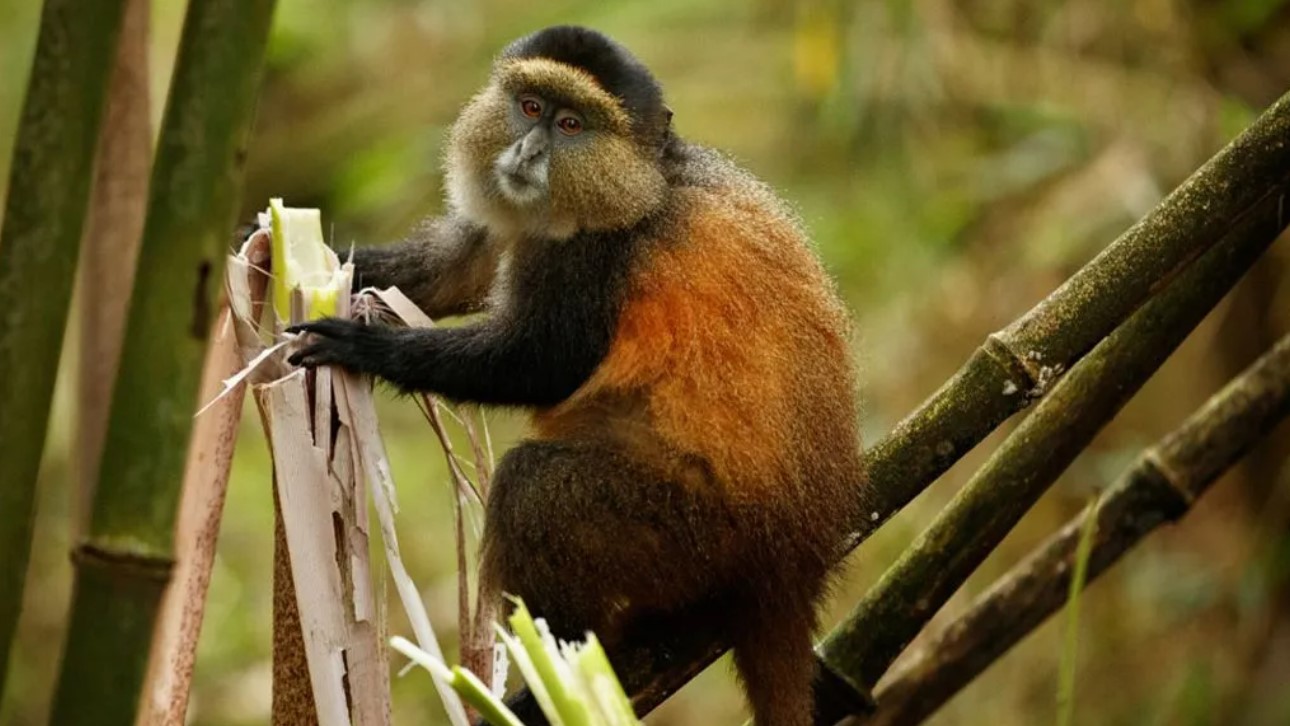
- Golden Monkeys (Cercopithecus mitis kandti): Mgahinga’s hillside trails and Bwindi’s forest edges glow with their golden coats when the light is just right—keep your eyes peeled at dawn or dusk.
- Blue Monkeys (Cercopithecus mitis) and Vervet Monkeys (Chlorocebus pygerythrus): Widespread and often cheeky, they’re a delightful reminder that not every primate of Uganda is a far-off wonder; some stroll into your camp with a curious nod.
- Red-Tailed Monkeys (Cercopithecus ascanius): Forest edges where paths slip into shade offer bright-tailed, photogenic sightings.
- L’Hoest’s Monkeys (Cercopithecus lhoesti): Occasional guests in higher forests; shy but elegantly eyes-on-you moments can surprise.
- Nocturnal primates (galagos and pottos): Night walks in select reserves reveal a different kind of primate drama—glowing eyes in a flashlight beam, a pause, then a blink, and suddenly you’re in another hour of wonder.
Tips for spotting multiple species when exploring the Primates of Uganda
– Early birds catch the best light and the most active groups.
– Hire seasoned local guides who know where recent activity is and how weather changes animal patterns.
– Bring layers, rain gear, water, and a lens you’re comfortable carrying all day.
Practical tips for the best primate-viewing when exploring the Primates of Uganda
- Park fees and permits: Gorilla and chimp permits are limited. Plan, especially if your dates are fixed, or you’re visiting during peak seasons.
- Guided experiences: Official guides support safety, education, and conservation. They’re your best allies for respectful wildlife viewing.
- What to pack: A sturdy pair of boots, a daypack with water, sun protection, a light rain jacket, snacks, and a camera with a zoom lens.
- Health and safety: Vaccines and malaria prophylaxis as advised by a travel health clinician. Basic first aid and hand sanitiser are handy.
- Environmental respect: No feeding, no littering, stay on trails—your footprint matters.
- Photography etiquette: No flash, keep your distance, and savour the moment more than the shot.
Where to stay when exploring the Primates of Uganda
- Base camps near Bwindi and Mgahinga: Look for lodges that emphasise conservation and community projects. They often offer pre-trek briefings that set expectations and ease hearts.
- Seasonal planning: Dry seasons are popular for trekking; shoulder seasons can offer quieter, equally magical experiences with lush scenery.
- Sustainable tourism: Choose operators who fund ranger programs, anti-poaching efforts, and local conservation education. Your booking helps protect habitats and communities.
In conclusion, Uganda’s primates invite you into a living story—the kind of story you carry with you long after you’ve left the forest. By choosing guided, regulated experiences and respecting park rules, you help protect habitats and communities while you gather unforgettable memories.