
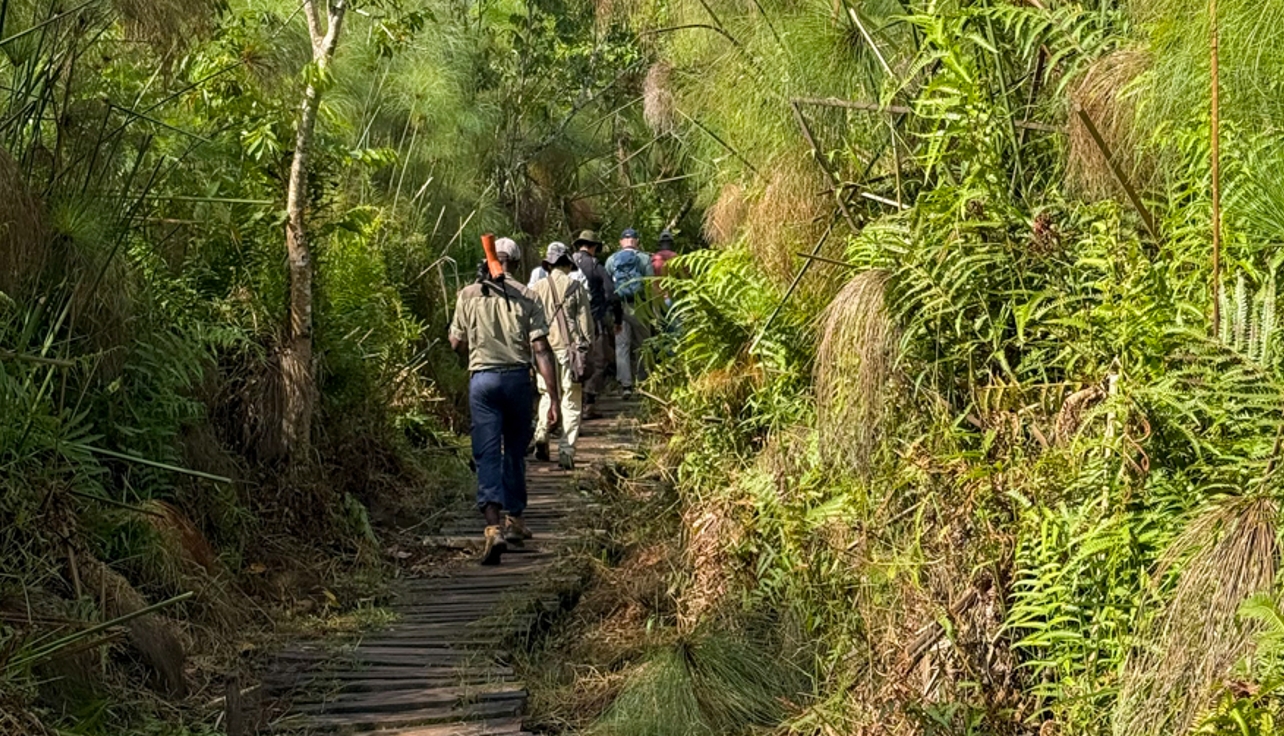
Kibale Forest Walking Experience
Kibale Forest Walking Experience: The park is known for its primate safaris, especially for seeing endangered chimpanzees. In addition to chimpanzee trekking, visitors can enjoy nature walking safaris and other adventure activities. Located in western Uganda, covering the districts of Kamwenge, Kyenjojo, Kabarole, and Kasese. The park spans 776 sq km and features diverse wildlife, including several mammals and bird species. Participants can best observe the wildlife by engaging in nature walks and hiking activities.
Kibale Forest Walking Experience
The park authority and local accommodations offer walking safari experiences for visitors, such as nature walks, particularly for nature lovers. These nature walk safaris allow guests to explore the park’s natural beauty on foot, with various trails available for nature walks after activities like chimpanzee trekking. Nature walk activities in Kibale Forest National Park happen in different areas, both inside and outside the forest. Each location features unique wildlife and attractions based on the chosen trail. It is advisable to inform your guide about your interests before selecting a trail.
Forest walks
Following the Kibale Forest walking experience, forest walks occur in Kibale Forest and are guided by armed rangers. They happen both during the day and at night, appealing to visitors interested in nocturnal wildlife. The walks last between 1 and 5 hours, allowing visitors to see various mammals, birds, and plants. The forest trek in Kibale Forest National Park starts at Kanyanchu Visitor’s center, covering over 12 km. The hike lasts 3 to 5 hours, allowing visitors to see unique wildlife, including forest elephants, primates, and various bird species.
Sebitoli forest.
Sebitoli Forest, located in Kibale Forest National Park near Fort Portal, is known for its rich birdlife. This evergreen forest is a popular spot for birders and nature lovers. There is a nature walking trail that spans 12 km, which typically takes about 3-5 hours to complete. On this trail, visitors can enjoy the beauty of the forest and see various bird species, as well as primates like red-tailed monkeys, black and white colobus monkeys, blue monkeys, red colobus monkeys, and vervet monkeys.
To birders and nature lovers, Sebitoli is a perfect place for unique forest birds such as the Red-faced Warbler, Nahan’s Francolin, Little Greenbul, African Pitta, African Greenbul, Black Bee Eater, Crowned Eagle, Green-breasted Pitta, Yellow-footed Flycatcher, and Blue-breasted Kingfisher, among others.
Crater walks
The park features several attractions, including scenic crater lakes like Lake Nyinambuga, Lake Nyabikere, and Lake Nyinaburitwa. During nature walk safaris, visitors can explore these lakes near nearby lodges, providing beautiful views and a peaceful atmosphere. You can choose which lakes to visit based on their distance and your location in the park.
At the crater lakes, you will learn about their formation from ancient volcanic eruptions. The crater walks provide opportunities to observe unique bird species, especially for bird enthusiasts. Birds to see include the Western Nicator, African Pied Wagtail, Cassin’s Spinetail, Grey Parrot, Yellow-rumped Tinkerbird, Blue-headed Bee-eater, Brown Illadopsis, Little Greenbul, Rwenzori Apalis, and others.
During crater walks, you will see different creatures like small mammals, primates, reptiles, and various plants. A guide will provide information and answer questions about these species. Walking offers a closer experience with nature than viewing it from a safari vehicle.
Crater Lakes to Explore in Kibale Forest
Crater lakes in Kibale Forest include Lake Nyabikere, Lake Kyaninga, Lake Nkuruba, Lake Kifuruka, Lake Nyamirima, Lake Nyinambuga, and Lake Rugembe, among others. All these lakes have various trekking routes that can lead you to the top of these lakes. While on top of some of these lakes, expect to see the Rwenzori Mountains.
Bigodi wetland
Bigodi Wetland is located near Kibale National Park and offers many activities like guided nature walks, birdwatching, and community visits. The swamp hosts over 138 bird species, best seen during walks. It also has various animal species, especially small mammals and primates like red-tailed and blue monkeys.
Bigodi Wetland, located in Kibale National Park, is a renowned spot for birdwatching, featuring both forest and wetland birds. Bird species to see include the Bocage’s Bush Shrike, White-spotted Flufftail, Brown-crowned Tchagra, Abyssinian Ground Thrush, Great Blue Turaco, Black-capped Apalis, Black Gonolek, Purple-breasted Sunbird, African Pitta, Brown-chested Alethe, and others.
Accommodation in Kibale National Park
Accommodation is essential for travellers on safari, especially those staying overnight before or after activities. Kibale Forest National Park provides various lodging options, including luxury, midrange, and budget facilities. These lodges include Ndali Lodge, Turaco Treetops, Chimpundu Lodge, Chimpanzee Forest Lodge, Crater Safari Lodge, Kanyanchu River Camp, Kyaninga Lodge, Primate Lodge, Kibale Lodge, Papaya Lake Lodge, and others.
Best Time for Walking Safaris in Kibale
Nature walking safaris in Kibale Forest National Park can occur any time, but the best time is during the dry season from June to September and December to February. During this peak season, there is little to no rainfall, making the trails dry and easy to walk, allowing visitors to explore most areas of the park.
Visitors can still explore Kibale Forest National Park during the rainy season from March to May and October to November, but it’s not ideal. Budget travelers benefit from discounts on lodges and tours, although walking safaris in the rain may not be enjoyable.
Travelers during the rainy season face challenges due to muddy, slippery walking safaris. Tall and thick vegetation hides wildlife and attractions. Additionally, safari vehicles can get stuck in mud, leading to frustrating delays reaching the park.