
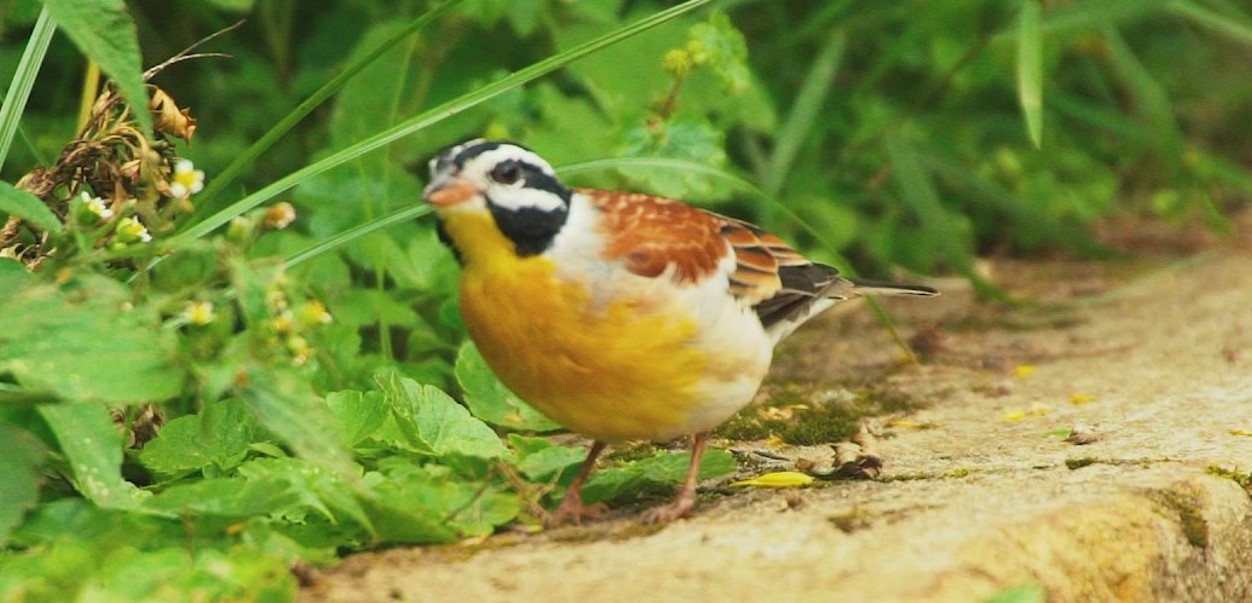
The African Golden-Breasted Bunting in Uganda
The African Golden-Breasted Bunting in Uganda: Considered the “Pearl of Africa,” Uganda is well-known for its breathtaking landscapes, varied wildlife, and vibrant culture. The African golden-breasted bunting (Emberiza tahapisi), a small yet remarkably exquisite bird that adorns the highlands and wetlands of Uganda, is one of its numerous marvels. This blog article aims to explore the African golden-breasted bunting’s distinctive characteristics, habitats, behaviour, and conservation status in Uganda.
Overview of the African Golden-Breasted Bunting in Uganda
Belonging to the Emberizidae family, the African Golden-breasted Bunting is a small passerine bird distinguished by its bright plumage and upbeat disposition. The brilliant golden-yellow breast of the male bunting is complemented by a greyish head and a deep olive-brown upper body. The female is equally attractive in her own right, if less colourful, with mellow yellowish-brown tones that blend in well with the grasses and shrubs where they frequently live.
Its short, robust bill, which is characteristic of seed-eating birds, allows the species to efficiently forage for grains and seeds in its natural environment. During the breeding season, the bunting’s melodic singing frequently fills the air, adding a captivating element to Uganda’s already rich acoustics.
Distribution and Habitat of the African Golden-Breasted Bunting in Uganda
Uganda is home to a sizable population of African Golden-breasted Buntings, which are mostly found in sub-Saharan Africa. These birds are most commonly found in Uganda’s grasslands, savannas, and agricultural areas, frequently close to water sources that yield a wealth of seeds and insects. They like places with bushes scattered about and low, sparse vegetation because these regions offer food and protection from any predators.
The marshes of Entebbe, the vicinity of Lake Victoria, and the grasslands of Queen Elizabeth National Park are some of the top spots in Uganda to see these charming birds. These habitats provide opportunity for birdwatchers to see this avian treasure in its natural habitat in addition to meeting the bunting’s nutritional demands.
Behavior and Diet of the African Golden-Breasted Bunting
The gregarious African Golden-breasted Bunting is frequently observed foraging in small groups. Although grass and legume seeds make up the majority of their food, they have been observed to eat small insects, particularly during the breeding season when they need more protein for their young. They are adaptable inhabitants of Uganda’s diverse ecosystems because of their omnivorous diet, which enables them to flourish in a variety of environments.
Being ground feeders, these buntings are frequently observed hopping around in quest of food. They are particularly well-known for their unique flight patterns, which consist of brief gliding intervals punctuated by phases of flapping. Males fly on display during the breeding season to entice females and mark their territory by flaunting their colourful plumage. Both to attract mates and to protect their territory from competing males, they use their melodic songs as communication tools.
Breeding and Nesting
The rainy season in Uganda, which normally lasts from March to May and September to November, usually falls within the breeding season for the African Golden-breasted Bunting. The female constructs a cup-shaped nest lined with soft materials like feathers and grasses at nesting locations, which are frequently selected in tall grasses or shrubs.
Usually, females lay two to five eggs in a clutch, which they then incubate for 11 to 14 days. Both parents actively participate in the chicks’ upbringing after hatching, ensuring they eat a healthy diet of seeds and insects until they fledge. In addition to ensuring the young’s survival, the care given by both parents fosters the development of close family ties within the species.
Conservation Status of the African Golden-Breasted Bunting in Uganda
The populations of the African Golden-breasted Bunting are seriously threatened by habitat loss and degradation, even though it is not currently listed as endangered. Many bird species, including the Bunting, have seen a loss in suitable habitats in Uganda due to urbanisation, agricultural expansion, and widespread deforestation. These difficulties are made worse by climate change, which modifies seasonal rhythms and the availability of food.
To protect the habitats of the African Golden-breasted Bunting and other indigenous species, conservation activities in Uganda are essential. Conservation efforts that support sustainable farming methods and safeguard important ecosystems are becoming more and more important to organisations and governmental entities. Additionally, educating residents about the value of biodiversity helps promote an environmentally conscious culture.
In conclusion, Uganda’s rich avifauna is enhanced by the appealing African Golden-breasted Bunting, which also draws attention to the complex web of life that occurs within its ecosystems. We can more effectively promote this bird’s conservation and the preservation of its environment if we recognise and value its beauty and significance. In order for species like the African golden-breasted bunting to flourish for many generations, we must find a balance between meeting human needs and protecting the environment as Uganda develops and modernises.
For bird lovers, naturalists, and conservationists, the African Golden-breasted Bunting remains a symbol of the rich biodiversity that Uganda has to offer. Whether you are a seasoned ornithologist or a casual birdwatcher, witnessing the vibrant colours and enchanting songs of this species in its natural habitat is an experience that encapsulates the essence of Uganda’s natural beauty. Remember to enquire with Journeys Uganda for the most amazing and rewarding birding excursions in East Africa.
What are the best places to see the African Golden-Breasted Bunting in Uganda?
The African Golden-Breasted Bunting can be seen in several excellent spots in Uganda, which is known for its abundant biodiversity. One of the best locations is the Mabamba Wetland, which is close to Lake Victoria. Here, the vast grasslands and lush foliage make it the perfect place for these eye-catching birds to call home. Furthermore, Queen Elizabeth National Park’s wetlands offer fantastic prospects, especially in the vicinity of the Mweya Peninsula’s varied habitats.
Another remarkable location is Semuliki National Park, which is distinguished by its distinct blend of savannah and forest, creating an atmosphere that is favourable for the Bunting’s foraging practices. In addition, the neighbouring regions of Entebbe and the vast grassland networks of East Africa are important places to observe this colourful species. With its abundance of avian diversity and breathtaking surroundings, Uganda is a model location for birdwatchers hoping to capture the stunning beauty of the African Golden-Breasted Bunting.